Introduction
In today’s global business environment, supply chain performance directly influences profitability, customer satisfaction, and competitive advantage. A product sourced at an attractive manufacturing cost can quickly become uncompetitive if transportation inefficiencies, port congestion, documentation errors, or poor logistics planning increase landed costs and delivery timelines.
For importers, distributors, manufacturers, retailers, and procurement professionals sourcing from India, logistics is no longer simply about moving cargo from one location to another. Modern supply chains require strategic planning across transportation modes, warehousing networks, customs procedures, inventory management, and international distribution channels.
As India continues to strengthen its position as a global manufacturing and sourcing hub, businesses must understand how to optimize container utilization, reduce transit times, manage logistics costs, and create resilient transportation networks capable of supporting international trade.
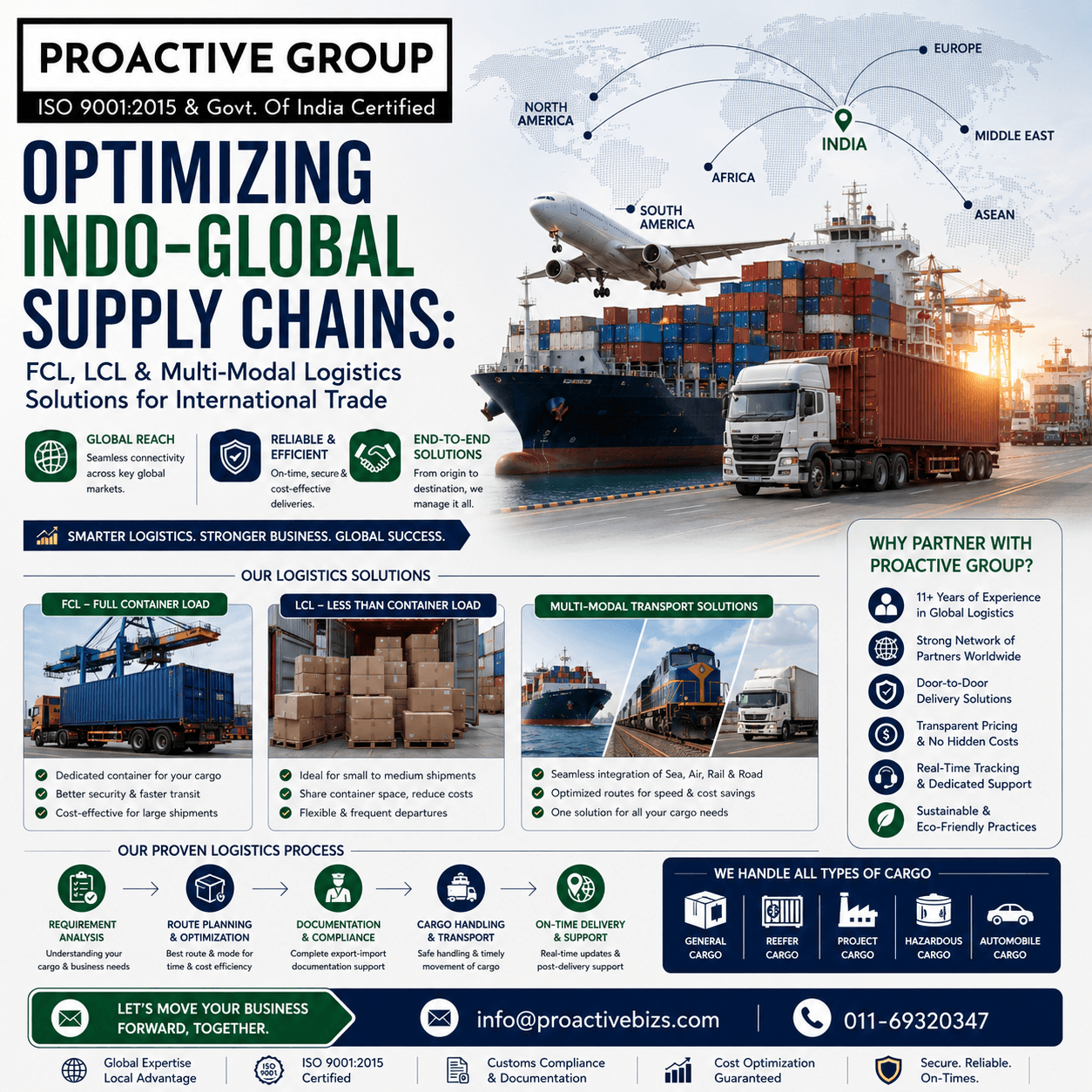
This guide explains how FCL, LCL, multi-modal transportation, Inland Container Depots (ICDs), third-party logistics (3PL), and strategic transshipment hubs can help businesses build efficient and scalable global supply chains.
Why Logistics Optimization Matters
A well-designed logistics strategy delivers significant commercial advantages.
Lower Transportation Costs
Optimized routing and container utilization reduce freight expenses.
Faster Delivery Times
Efficient transportation networks improve customer satisfaction.
Better Inventory Management
Improved visibility reduces excess inventory and stock shortages.
Reduced Supply Chain Risk
Diversified transportation options improve operational resilience.
Improved Cash Flow
Faster inventory movement accelerates revenue cycles.
Greater Market Competitiveness
Lower landed costs improve pricing flexibility.
For global buyers, logistics optimization often delivers greater profitability gains than aggressive supplier negotiations alone.
Understanding Global Supply Chain Logistics
An international shipment typically moves through several interconnected stages:
Factory Production
↓
Packaging & Documentation
↓
Inland Transportation
↓
Containerization
↓
Customs Clearance
↓
Port Operations
↓
International Freight
↓
Destination Customs Clearance
↓
Warehousing & Distribution
↓
Final Delivery
Each stage presents opportunities for efficiency improvements and cost savings.
Understanding Container Shipping: FCL vs LCL
One of the most important logistics decisions involves selecting the appropriate container shipping method.
The choice depends on shipment volume, cost considerations, urgency, and inventory strategy.
Full Container Load (FCL)
Full Container Load (FCL) means a single importer utilizes an entire shipping container.
Typical container sizes include:
- 20-Foot Container
- 40-Foot Container
- 40-Foot High Cube Container
Advantages of FCL
Lower Cost Per Unit
Transportation costs are spread across larger cargo volumes.
Faster Transit
Containers move directly without consolidation delays.
Reduced Handling Risk
Cargo remains sealed throughout transportation.
Better Security
Dedicated container space minimizes exposure to damage and contamination.
Best Suited For
- High-volume imports
- Manufacturing operations
- Large retail inventories
- Industrial goods
- Bulk commodities
FCL is generally the preferred option for businesses with predictable procurement volumes.
Less Than Container Load (LCL)
Less Than Container Load (LCL) allows multiple shippers to share container space.
Cargo is charged based on volume, typically measured in cubic meters (CBM).
Advantages of LCL
Lower Initial Investment
No need to wait until enough cargo exists to fill an entire container.
Better Inventory Flexibility
Supports smaller and more frequent shipments.
Reduced Storage Costs
Allows businesses to operate lean inventory models.
Market Testing Opportunities
Ideal for evaluating new products and suppliers.
Best Suited For
- SMEs
- Startups
- E-commerce Businesses
- Specialty Product Importers
- Low-Volume Shipments
LCL provides flexibility while reducing working capital requirements.
FCL vs LCL: Which is Better?
The answer depends on business objectives.
| Factor | FCL | LCL |
|---|---|---|
| Cost Per Unit | Lower | Higher |
| Transit Speed | Faster | Slower |
| Handling Risk | Lower | Higher |
| Inventory Flexibility | Lower | Higher |
| Capital Requirement | Higher | Lower |
| Best For | Bulk Cargo | Small Shipments |
Businesses should evaluate both cost and operational requirements before selecting a shipping method.
Multi-Modal Logistics: Building Supply Chain Resilience
Modern supply chains rarely rely on a single transportation mode.
Multi-modal logistics combines multiple transportation methods to improve efficiency and reliability.
Typical combinations include:
- Road + Sea
- Rail + Sea
- Road + Air
- Rail + Road + Sea
The objective is to optimize cost, speed, and cargo handling.
Road Transportation Solutions
Road transportation remains the backbone of domestic cargo movement.
Applications
- Factory Pickup
- Regional Distribution
- Port Connectivity
- Last-Mile Delivery
Benefits
- Flexible Routing
- Door-to-Door Service
- Fast Regional Movement
Road transport plays a critical role in first-mile and last-mile logistics operations.
Rail Logistics and Inland Connectivity
India’s growing rail freight infrastructure provides significant advantages.
Benefits
- Lower Transportation Costs
- Reduced Carbon Footprint
- High Cargo Capacity
- Reliable Scheduling
Rail connectivity becomes particularly valuable for inland manufacturing clusters located far from seaports.
Inland Container Depots (ICDs): The Hidden Advantage
Many international buyers underestimate the importance of Inland Container Depots.
An ICD functions as an inland dry port where cargo can be:
- Containerized
- Inspected
- Customs Cleared
- Sealed for Export
Benefits of ICD Operations
Reduced Port Congestion
Cargo processing occurs away from coastal ports.
Faster Customs Procedures
Many formalities are completed inland.
Better Cargo Security
Containers remain sealed throughout transportation.
Improved Logistics Planning
Enhanced coordination between manufacturing and shipping operations.
Strategically utilizing ICDs often reduces delays and improves shipment reliability.
Air Freight Solutions
Air freight remains the fastest international transportation option.
Suitable For
- High-Value Products
- Electronics
- Pharmaceuticals
- Urgent Shipments
- Time-Sensitive Inventory
Benefits
- Rapid Delivery
- Global Reach
- Reduced Inventory Holding Costs
Although more expensive than ocean freight, air transportation provides unmatched speed.
Sea Freight Solutions
Sea freight remains the dominant mode for international trade.
Advantages
Cost Efficiency
Most economical option for large-volume shipments.
Global Coverage
Access to virtually every major market.
High Capacity
Supports industrial-scale cargo movement.
Sustainability
Lower environmental impact per unit transported.
Sea freight forms the backbone of international sourcing and procurement operations.
Cold Chain Logistics and Temperature-Controlled Cargo
Certain products require strict environmental controls.
Common Cargo Types
- Food Products
- Dairy Products
- Pharmaceuticals
- Chemicals
- Healthcare Products
Key Requirements
- Temperature Monitoring
- Refrigerated Transportation
- Controlled Warehousing
- Specialized Packaging
Maintaining product integrity throughout transit is essential.
High-Value Cargo Security
High-value shipments require enhanced risk management.
Examples
- Electronics
- Industrial Equipment
- Luxury Goods
- Precision Instruments
Security Measures
- Cargo Tracking
- Tamper-Proof Packaging
- Route Monitoring
- Transit Insurance
Professional logistics management reduces exposure to loss and theft.
Strategic Transshipment Hubs and Global Distribution
Modern supply chains increasingly leverage international logistics hubs.
Benefits of Regional Distribution Hubs
- Faster Market Access
- Inventory Buffering
- Regional Fulfillment
- Reduced Delivery Times
Popular Global Logistics Hubs
- UAE
- Singapore
- Rotterdam
- Hamburg
- Hong Kong
These hubs improve flexibility and allow businesses to respond more effectively to market demand.
Third-Party Logistics (3PL) Solutions
Many organizations choose to outsource logistics functions.
A 3PL provider typically manages:
- Transportation
- Warehousing
- Customs Coordination
- Inventory Management
- Distribution
Benefits
- Lower Operating Costs
- Greater Scalability
- Access to Logistics Expertise
- Improved Supply Chain Visibility
Professional 3PL partnerships enable businesses to focus on core operations.
Warehousing and Inventory Management
Storage and inventory control directly influence supply chain performance.
Warehousing Functions
- Inventory Storage
- Consolidation
- Distribution
- Packaging
- Order Fulfillment
Benefits
- Better Inventory Control
- Reduced Stockouts
- Improved Customer Service
- Faster Distribution
Efficient warehousing supports smoother supply chain execution.
Transit Insurance and Risk Management
International cargo faces various risks.
Common Risks
- Cargo Damage
- Theft
- Weather Events
- Delays
- Accidents
Risk Mitigation Strategies
- Transit Insurance
- Cargo Tracking
- Secure Packaging
- Supplier Coordination
- Contingency Planning
Risk management protects both cargo and profitability.
Logistics Optimization Checklist
Before shipping internationally, verify:
✅ Appropriate Shipping Mode Selected
✅ FCL vs LCL Evaluation Completed
✅ Documentation Ready
✅ Customs Requirements Confirmed
✅ Cargo Insurance Arranged
✅ Packaging Standards Verified
✅ Inventory Planning Completed
✅ Tracking Systems Activated
✅ Delivery Timeline Confirmed
✅ Logistics Partner Selected
A structured logistics review significantly improves supply chain performance.
Why Businesses Choose PROACTIVE GROUP
PROACTIVE GROUP provides integrated logistics, transportation, sourcing, and international trade support for businesses operating across domestic and global markets.
Multi-Modal Logistics Expertise
Road, rail, air, and sea freight coordination.
Container Optimization
FCL and LCL shipment planning.
ICD and Customs Coordination
Efficient inland and port operations management.
International Logistics Support
Cross-border transportation and distribution solutions.
Supply Chain Visibility
Structured coordination from origin to destination.
End-to-End Execution
From factory pickup to final delivery.
Frequently Asked Questions (FAQs)
Q1. What is the difference between FCL and LCL?
FCL provides exclusive use of a container, while LCL allows multiple shippers to share container space and costs.
Q2. When should businesses choose FCL?
FCL is generally preferred when shipment volumes are sufficient to utilize most of a container’s capacity.
Q3. Are ICDs important for international trade?
Yes. ICDs streamline customs clearance, improve cargo security, and reduce port congestion.
Q4. Is LCL suitable for fragile products?
Yes, provided proper packaging, palletization, and cargo protection measures are implemented.
Q5. Why use a transshipment hub?
Transshipment hubs improve flexibility, support regional distribution, and enhance supply chain resilience.
Q6. What is a 3PL provider?
A Third-Party Logistics provider manages transportation, warehousing, distribution, and supply chain operations on behalf of businesses.
Q7. Which is faster: air freight or sea freight?
Air freight is significantly faster, while sea freight is more economical for larger shipments.
Q8. How can businesses reduce logistics costs?
Through route optimization, container utilization, inventory planning, multi-modal transportation, and strategic logistics partnerships.
Conclusion
Global supply chains are no longer defined solely by manufacturing efficiency. Transportation strategy, container optimization, customs coordination, warehousing, and distribution planning now play an equally important role in determining business success.
Organizations that understand when to use FCL versus LCL, leverage multi-modal logistics networks, utilize strategic ICD infrastructure, and partner with experienced logistics providers can significantly reduce costs, improve delivery reliability, and strengthen supply chain resilience.
Whether importing industrial goods, consumer products, machinery, electronics, textiles, or agricultural commodities from India, a well-structured logistics framework remains essential for maintaining competitive advantage in global markets.
